
Flu and winter vaccinations
The flu vaccine helps protect against influenza (flu)
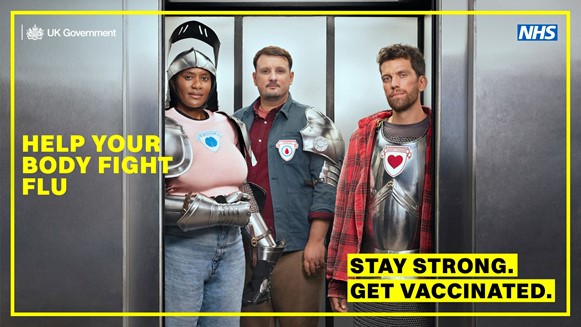
Flu is not just a heavy cold. Flu occurs every year, usually in the winter, which is why it’s sometimes called seasonal flu. It’s a highly infectious disease with symptoms that come on very quickly. Colds are much less serious and usually start gradually with a stuffy or runny nose and a sore throat. A bad bout of flu can be much worse than a heavy cold.
The most common symptoms of flu are fever, chills, headache, aches and pains in the joints and muscles, and extreme tiredness. Healthy individuals usually recover within 2 to 7 days, but for some the disease can lead to hospitalisation, permanent disability or even death.
For more information on how to Stay well this winter, please click the link
Flu vaccines help protect against the main types of flu virus circulating
- Flu spreads more easily in winter when we spend more time together indoors, it can cause serious illness.
- Most eligible adults will be able to get their flu vaccine from 1 October. This may be later than you’ve had the vaccine before, but it means you’ll have the best protection when flu is most likely to be circulating widely (December to February). Pregnant women and children will be able to get the flu vaccine from September as protection from vaccination lasts much longer in children than in adults (especially older adults).
- It is important to get protected, even if you have had a vaccine or been ill with flu before, as immunity fades over time and these viruses change each year.
- If you are vaccinated and catch flu this winter, you are likely to have milder symptoms and recover faster, cutting your risk of being hospitalised.
- The flu vaccine programme focuses on those at greatest risk of getting seriously ill.
- Flu often peaks over the festive and New Year period. Nobody wants to miss out on the festive celebrations with their friends and family this winter and the vaccines provide the best possible protection.
Those eligible for a flu vaccine include: people with certain long term health conditions, from 6 months to under 65's
- people aged 65 and over
- pregnant women
- all children aged 2 or 3 years old on 31 August 2025
- primary school aged children (from Reception to year 6)
- secondary school aged children (from year 7 to Year 11)
- care home residents
- carers in receipt of carer's allowance, or those who are the main carer of an elderly or disabled person
- close contacts of immunocompromised individuals
- front line health and social care workers
- Parents of children who are aged 2 or 3 (on or before 31 August 2025) should contact their GP surgery to book their child’s flu vaccination.
- School-aged children (from reception to Year 11) will mainly be offered their flu vaccinations at school
You will be able check your eligibility online for winter vaccinations.